-
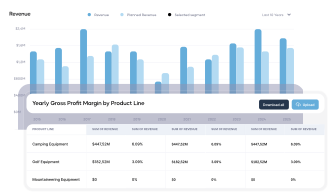
Interactive DashboardsCreate interactive BI dashboards with dynamic visuals.
-
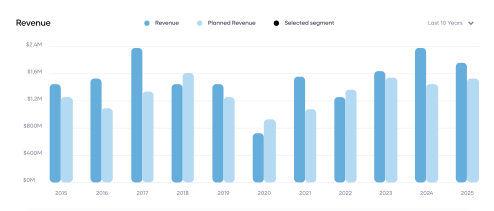
End-User BI ReportsCreate and deploy enterprise BI reports for use in any vertical.
-
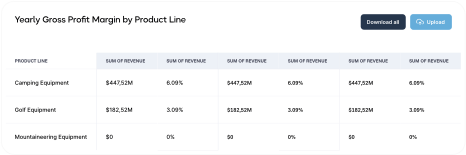
Spreadsheet AnalyticsNewLast-Mile Analytics Tool.
-
Narrative Data StoriesThe Next Evolution of Data Storytelling
-
Automated Business DocumentsNewDocument Generation for Smarter Workflows
-
Visual Data Pipeline BuilderDesign Complex Data Flows, Simply.
-
Wyn ArchitectureA lightweight server offers flexible deployment.
-
 Wyn Enterprise 7.1 is ReleasedThis release emphasizes Wyn document embedding and enhanced analytical express...
 -
 Choosing an Embedded BI Solution for SaaS ProvidersAdding BI features to your applications will improve your products, better serve your customers, and more. But where to start? In this guide, we discuss the many options.
-
Visual GalleryInteractive sample dashboards and reports.
-
BlogExplore Wyn, BI trends, and more.
-
WebinarsDiscover live and on-demand webinars.
-
Customer SuccessVisualize operational efficiency and streamline manufacturing processes.
-
Knowledge BaseGet quick answers with articles and guides.
-
VideosVideo tutorials, trends and best practices.
-
WhitepapersDetailed reports on the latest trends in BI.
-
 Choosing an Embedded BI Solution for SaaS ProvidersAdding BI features to your applications will impr...
 -

Whether you’re an organization that uses analytics or a software vendor that needs to add BI features to your product, the ability to white label a solution can provide a number of benefits. And whether you call it white label data analytics, white label analytics, white label BI, OEM BI or white label embedded BI, it’s all about customizing BI to suit your preferences.
Embedded analytics allows you to embed real-time reports and interactive dashboards—even self-service capabilities—within users’ standard workflows and applications. White label analytics reports are a subset of embedded analytics that allows you to create a customizable analytics solution embedded in your internal or commercial application, which is indistinguishable to users from their other workflows and applications. With the right embedded bi tools, these solutions can be deployed faster and with greater flexibility.
Maybe you’re looking to embed analytics into a native application or as part of an enterprise deployment. Maybe you want to deploy standalone analytical applications, but with your corporate branding. Or maybe you’re a SaaS provider looking to embed OEM BI tools or white label BI tools or an OEM analytics platform into your products to do more with your data: generate revenue, acquire customers, and prevent customer churn.Whatever the case, white label analytics reports allow you to create reports and dashboards that look like they were created in-house with your own corporate branding and stylistic elements. Here are six key benefits of white label embedded BI:
- Stay focused on your core business
- Speed time to market
- Ensure brand consistency
- Increase user adoption
- Drive competitive advantage
- Stay on top of industry innovations
1. Stay focused on your core business
Many companies that use BI, or software vendors that incorporate analytics into their products, don’t have the in-house expertise or resources to build a full-fledged BI tool internally. Building embeddable BI modules requires an extensive level of technical knowledge, and you’ll need to keep up with best practices as the technology evolves—from learning new data visualization principles to UI and UX fundamentals—as well as data governance and security best practices.
With white label BI tools or OEM BI, your team can focus on your core business—and users can start benefitting from analytics within days—rather than attempting to build reports and dashboards from scratch. And, you won’t have to worry about the scope and cost of a build-your-own development spiraling out of control.
2. Speed time to market
Building your own embedded BI solution can take years to plan, design, and develop—and customizations, delays, or complications can push that timeline out even further. Plus, there’s a learning curve, so you’ll need to invest time and money to get your team up to speed.
White-label BI software and embedded BI tools can be up and running in a matter of days or weeks—not months—by seamlessly integrating with existing internal or commercial applications. Data insights are available to any authorized user, even if they don’t have a background in statistical analysis. And that means you’ll achieve a faster time to market with products and services.
3. Ensure brand consistency
White labeling allows you to customize visual elements such as colors, fonts, and logos, so analytic elements seamlessly flow from your application rather than looking like a third-party add-on. In other words, to users, it’s indistinguishable from their business application or SaaS product. For ISVs and SaaS providers, a white label embedded BII solution gives you the advanced analytics capabilities you need while providing a seamless user experience with your product or application.
This also creates a visually appealing user experience with your own branding. And the same applies to sub-branding: If you host a multi-tenant application where each tenant requires its own branding to be displayed, you can customize your white label analytics reports solution for multiple brands.
4. Increase user adoption
User adoption is critical to the success of any IT project. You can have the best technology, but if no one uses it, then your implementation will be a failure. Allowing your users to engage with data in a single application—rather than having to export data into other tools or spreadsheets, like Excel—helps to reduce complexity and confusion.
Because it’s part of an existing application they use regularly and they aren’t forced to login to other applications to do their work, this promotes “application stickiness.” And having the same look and feel as internal applications creates a seamless user experience, which helps to drive user adoption. That, in turn, reduces data silos and creates a data-driven culture with white label data analytics capabilities.
5. Drive competitive advantage
A white label analytics reports or OEM BI solution allows users to take action on data, right from their day-to-day workflows, without shifting to other tools. With self-service BI capabilities, for example, users can create their own reports and dashboards from applications they use regularly, so they’ll engage with business data more frequently and with ease. This can increase productivity and drive competitive advantage—without a big learning curve.
Leading companies use white label BI tools to unlock this advantage and differentiate in their market.
6. Stay on top of industry innovations
A white label BI software means you don’t have to worry about product updates—you’ll always have the latest version. With a market-driven platform, you’ll get the latest updates and releases from experts in BI tools rather than depending on internal resources. You can also bring in cloud-based sources, like Snowflake. You’ll also get instant access to the latest industry innovations in areas like self-service features, artificial intelligence and predictive analysis, without having to lift a finger.
White label data analytics gives your team ongoing access to new technologies.
How to select a white-label BI solution
There are a lot of BI options out there, whether you’re looking to use analytics in your business or you’re an ISV, system integrator, or SaaS provider that needs to embed analytic capabilities. When choosing embeddable white label analytics reports or OEM BI, here are a few things to look for:
Open and comprehensive API: This allows you to seamlessly integrate with any internal or commercial application. Enhanced white labeling functionality should support the customization of a number of embedded BI elements, such as custom portal themes, document themes, logos, and UI customizations, among others.
Low-code embedded BI: If you’re a software developer, you can increase developer productivity with low-code embedding. Look for a solution that supports OEM installation and embedding, and can integrate with common development platforms and frameworks such as JavaScript, React, Angular, PHP, and .NET.
Native multi-tenant support: If you have multiple customers, your BI solution should offer built-in multi-tenant support to manage your BI resources across all customers from a single environment and provide predictable TCO.
Security: Look for a solution that allows you to configure security rules such as role-based permissions and extensible security with user context, as well as external indentity services such as oAuth, Azure AD, OpenID, and SAML—so you don’t have to reinvent the wheel.
Scalability: You can lower or maintain your BI budget with flat-fee server-based licensing that allows you to scale your application and user base without additional costs, such as per-user fees.
Ultimately, a white label embedded BI solution should save time, money, and resources—and help you gain insights to innovate and compete with your core offerings. To learn more about white-label BI software solutions, contact Wyn for a custom demo and free trial.
Understand the Story Behind Your Data
Wyn is a web-based BI and data analytics platform that provides greater insight into your data.
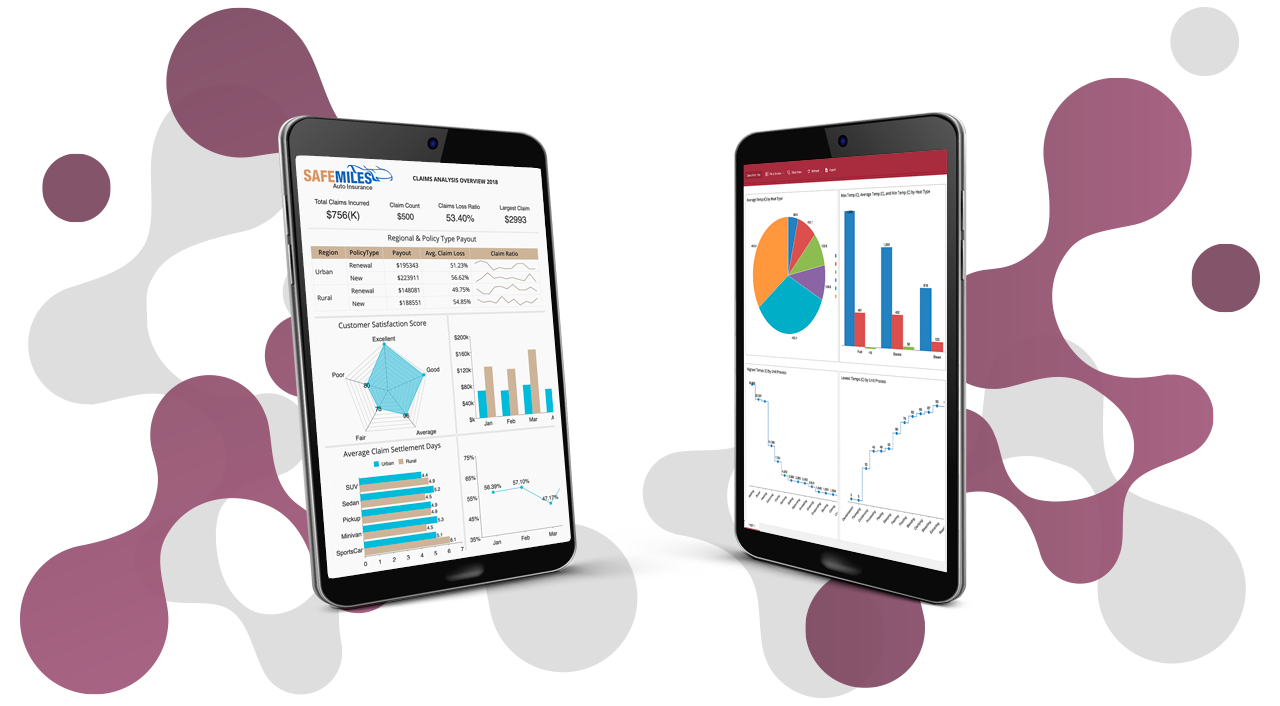
Wyn offers built-in tools for report and dashboard creation, data governance, security integration, embedded BI, automated document distribution, and a business-user-friendly interface for self-service business intelligence.
FAQ: White-Label BI Analytics Tools
1. What is a white-label BI analytics tool?
A white-label BI analytics tool is a customizable business intelligence platform that you can brand as your own. It embeds dashboards, reports, and analytics directly into your application, delivering a seamless, fully branded insight experience for your users.
2. What are the main benefits of white-label BI solutions?
They accelerate time to market, unify branding, and increase user adoption. You gain competitive differentiation while skipping the cost and risk of building analytics from scratch, letting your team focus on core product value.
3. How do white-label BI tools support brand consistency?
They let you tailor visual identity across logos, colors, typography, and layout so analytics look native to your app. The result is a cohesive user experience that reinforces your brand at every touchpoint.
4. What’s the difference between embedded analytics and white-label BI?
Embedded analytics integrates BI features into your product. White-label BI goes further by enabling full rebranding and UI control. Not all embedded tools support full white-labeling; true white-label BI makes analytics feel like a native module, not a third-party add-on.
5. How can white-label BI analytics improve user adoption?
Users engage more when analytics live inside the interface they already trust. Familiar branding, consistent UX, and frictionless access reduce learning curves and encourage daily use and deeper exploration of data.
6. What features should you look for in a white-label BI solution?
Prioritize UI theming, multi-tenant isolation, role-based security, comprehensive APIs/SDKs, low-code embedding options, and flexible deployment models. Licensing that scales without per-user fees helps you grow confidently.
7. Are white-label BI tools suitable for SaaS providers and ISVs?
Yes. SaaS and ISVs can rapidly add enterprise-grade analytics, increase retention, and open new revenue streams—without diverting product roadmaps to build BI from the ground up.
8. How do white-label BI solutions help companies stay competitive?
They let you deploy new analytics features quickly, adopt the latest BI innovations, and respond faster to market shifts. This agility translates into more value for customers and a sustained edge in your category.
9. How does Wyn Enterprise support white-label BI analytics?
Wyn Enterprise provides a fully customizable, white-label BI platform with embedded dashboards, pixel-perfect reporting, data governance, and localization. You can set logos, brand colors, document themes, and languages, deploy to unlimited users, and scale without per-user fees.
10. How can I evaluate and select the best white-label BI analytics tool?
Define branding, integration, data, and security requirements. Request demos and trials, validate API depth, check multi-tenant controls, and review licensing flexibility and vendor support. Choose the platform that aligns with your technical stack and growth plans.

Vawn Himmelsbach
Vawn Himmelsbach is a writer and editor specializing in enterprise IT, writing for national newspapers and technology trade magazines on everything from AI to zero-day threats. She also spent three years working abroad as an Asian correspondent, covering all things tech.


Loved by industry
experts and real users